Farm work is hard on footwear. Mud, manure, wet grass, gravel, irrigation water, livestock chores, long walking days, and uneven ground can destroy the wrong pair fast. For farmers, I look for work shoes and boots that are waterproof, easy to clean, stable underfoot, comfortable for long shifts, and protective enough for the job.
For this guide, I focused on practical farm footwear: rubber chore boots, waterproof leather work boots, and slip-resistant agricultural boots. I also considered verified product specifications, recurring buyer feedback, and how each boot fits real farm conditions.
Quick Summary
This article is for farmers, ranchers, livestock workers, gardeners, homesteaders, and anyone who spends long days in wet, muddy, or messy outdoor work areas.
In my opinion, the best work shoes for farmers are usually waterproof pull-on boots for wet chores and supportive leather work boots for drier field, shop, and equipment work. If I had to choose one overall pick for most farm jobs, I would go with the MUCK Chore Classic Men’s Steel Toe Boot because it combines waterproof protection, safety-toe coverage, and farm-ready durability.
Top Product List
- MUCK Chore Classic Men's Steel Toe Boot — Best for Overall Farm Work
- LaCrosse Men's Grange 18-inch Waterproof Boot — Best for Muddy Fields
- Xtratuf Men's Legacy Boot — Best for Wet and Slippery Chores
- DUNLOP Chesapeake Steel Toe Waterproof Work Boots — Best Budget Steel Toe
- Wolverine Floorhand Waterproof Soft Toe 6-inch Boot — Best Leather Farm Work Boot
- TINGLEY Pilot G2 Plain Toe Knee Boot — Best Lightweight Knee Boot
Top 6 Best Work Shoes for Farmers for 2026
MUCK Chore Classic Men's Steel Toe Boot
Product Image
Short Description
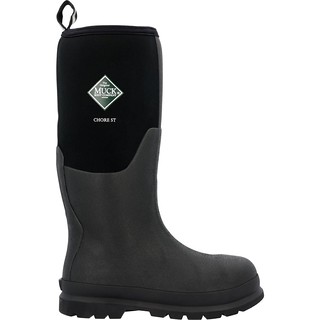
The MUCK Chore Classic Steel Toe is built for dirty, wet, all-day chore work. I like it most for farmers who need a waterproof pull-on boot that can handle livestock pens, muddy lanes, wash-down areas, and general barn work while still offering steel-toe protection.
Key Specifications
- Safety toe type: Steel toe
- ASTM certification: ASTM F2413 M/I/C impact and compression; electrical hazard protection listed by manufacturer
- Waterproof: Yes
- Upper material: Neoprene and hand-laid rubber
- Reinforcement: Triple toe and quadruple rubber heel reinforcement
- Boot style: Pull-on chore boot
- Insulation: Self-insulating neoprene construction
- Made in: USA version available on manufacturer listing
Pros
- Fully waterproof for mud, manure, and wet grass
- Steel toe protection for livestock, gates, and equipment areas
- Reinforced toe and heel help with farm abuse
- Easy to hose off
- More comfortable around the leg than many hard rubber boots
Cons
- Warmer than a leather boot in hot weather
- No laces, so fit depends heavily on sizing
- Heavier than lightweight rain boots
My Experience
When I think about farm chores, this is the kind of boot I trust most: tall, waterproof, protective, and simple to clean. The neoprene upper makes it feel less stiff than old-school rubber boots, and that matters when I am bending, climbing, or walking between the barn and field.
The break-in period is usually minimal compared with leather work boots. Support is good for a rubber chore boot, though I would still use better insoles if I were standing on concrete all day. Traction is dependable in mud and wet barn areas, but like any rubber boot, it can still slide on greasy surfaces.
For long shifts, the biggest tradeoff is heat. I would pick this for wet, cold, messy, or unpredictable farm work, but I would not call it the coolest summer option.
What Other Buyers Say
Buyers often praise the waterproofing, chore-ready toughness, and comfort for long outdoor work. The most common complaints are about sizing, warmth in hot weather, and durability expectations under daily heavy use.
Best For
Best for livestock farms, dairy chores, muddy barnyards, wet field work, and farmers who need waterproof steel-toe protection.
➤➤➤ Click Here to Check Price on Amazon
LaCrosse Men's Grange 18-inch Waterproof Boot
Product Image
Short Description
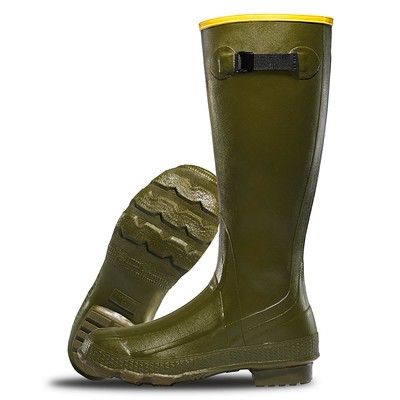
The LaCrosse Grange is a classic 18-inch rubber boot for wet fields, irrigation work, tall grass, and muddy farm jobs. I recommend it for farmers who want a tall, simple, waterproof boot without a safety toe.
Key Specifications
- Safety toe type: Soft toe
- Waterproof: Yes
- Upper material: Hand-laid rubber
- Boot height: 18 inches
- Insulation: Non-insulated
- Closure: Pull-on
- Primary use: Wet outdoor work, hunting, field use
Pros
- Tall 18-inch shaft gives excellent mud and water coverage
- Natural rubber construction feels durable and flexible
- Non-insulated design works better in mild weather
- Good for fields, gardens, and wet grass
- Simple pull-on design
Cons
- No safety toe
- Less underfoot structure than a lace-up work boot
- Can feel warm in summer despite being non-insulated
My Experience
I like the Grange for field jobs where the main problem is water, mud, and wet vegetation. The 18-inch height is the reason I would choose it over a short deck boot when walking through soaked pasture edges or irrigation areas.
It is not the boot I would pick for heavy shop work or handling equipment because it lacks a safety toe. But for farm walking, light chores, gardening, and wet field work, the tall rubber build makes sense. The break-in is easier than heavy leather, and the flexible shaft helps when crouching or stepping over ruts.
For long days, I would pay attention to socks and insoles. Rubber boots can feel flat underfoot, so extra cushioning can make a real difference.
What Other Buyers Say
Buyers commonly mention that the Grange is waterproof, durable, and comfortable for a tall rubber boot. Some also like the snug ankle feel. Complaints usually involve fit, limited arch support, or wanting more insulation in cold weather.
Best For
Best for muddy fields, irrigation work, wet grass, gardening, and general outdoor farm use where a safety toe is not required.
➤➤➤ Click Here to Check Price on Amazon
Xtratuf Men's Legacy Boot
Product Image
Short Description
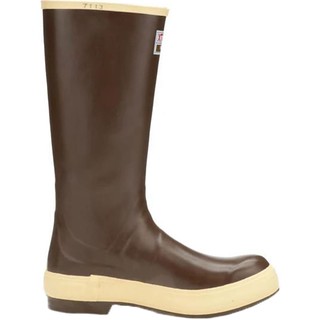
The Xtratuf Legacy Boot is known for wet, slippery work. While it is famous around fishing docks, I think it also makes sense for farmers who need strong waterproofing, chemical resistance, and dependable grip in slick chore areas.
Key Specifications
- Safety toe type: Soft toe
- Waterproof: Yes
- Construction: Triple-dipped seamless barrier
- Upper material: Neoprene-based shell
- Outsole: Non-marking slip-resistant Chevron outsole
- Resistance: Designed to resist many organic and inorganic acids, chemicals, and contaminants
- Boot height: 12-inch version in this listing
Pros
- Excellent waterproof protection
- Slip-resistant Chevron outsole works well on wet surfaces
- Flexible feel compared with many stiff rubber boots
- Useful around wash-down areas and wet barn floors
- Easy to clean
Cons
- No safety toe
- Not ideal for dry, rocky, or heavy equipment work
- Some buyers report mixed durability under hard daily use
My Experience
I would use the Xtratuf Legacy for wet chores where traction matters more than toe protection. The outsole design is the standout feature for me. On farms, slick surfaces are everywhere: wet concrete, wash racks, algae-covered areas, and muddy boards.
The boot feels more agile than some thick rubber farm boots, which I appreciate when moving quickly between chores. Stability is good on wet ground, though it does not offer the ankle lockdown of a lace-up leather boot.
For fit, I would be careful with sizing because pull-on rubber boots can feel loose at the heel if they are too large. For long wet shifts, good socks help reduce rubbing and moisture buildup.
What Other Buyers Say
Customers often praise the waterproof build, grip on wet surfaces, and flexibility. Common criticisms include sizing uncertainty and durability concerns from people who wear them daily in rough conditions.
Best For
Best for wet barn chores, wash-down areas, aquaculture, produce farms, rainy climates, and slick farm surfaces.
➤➤➤ Click Here to Check Price on Amazon
DUNLOP Chesapeake Steel Toe Waterproof Work Boots
Product Image
Short Description
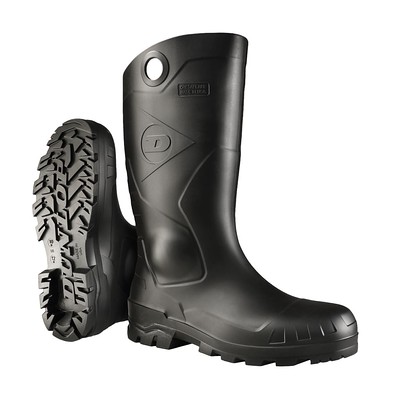
The Dunlop Chesapeake Steel Toe is a practical waterproof PVC boot for farmers who need basic toe protection at a more affordable price. I see it as a strong choice for messy chores, occasional barn work, and wet jobs where leather boots would get ruined.
Key Specifications
- Safety toe type: Steel toe
- Waterproof: Yes
- Upper material: PVC
- Boot style: Pull-on rubber-style work boot
- Calf fit: Wide-calf design listed by retailers
- Common size range: Broad men’s/unisex sizing listed by retailers
Pros
- Budget-friendly steel-toe option
- Waterproof PVC construction
- Easy to rinse clean
- Good for mud, manure, and wet chores
- Wide-calf design helps with pant legs and larger calves
Cons
- Less premium feel than neoprene-rubber farm boots
- PVC can feel stiffer than rubber
- Not as comfortable for very long walking days
My Experience
I would choose the Dunlop Chesapeake when value matters. Not every farm task requires a premium boot, especially if the work involves mud, chemicals, manure, and constant rinsing. The steel toe gives it an advantage over basic rain boots when there is a chance of dropped tools, gates, or equipment parts.
Comfort is acceptable for chore work, but I would not expect it to feel like a cushioned hiking boot. The support is basic, and the boot can feel stiff until you get used to it. For short to medium farm shifts, it makes a lot of sense. For 10-hour walking days, I would consider upgraded insoles.
What Other Buyers Say
Buyers commonly like the waterproof protection, low price, and practical steel toe. Recurring complaints are that the boot can feel stiff, sizing may vary, and comfort is more functional than plush.
Best For
Best for budget-conscious farmers, wet chores, manure work, barn cleanup, and occasional steel-toe farm tasks.
➤➤➤ Click Here to Check Price on Amazon
Wolverine Floorhand Waterproof Soft Toe 6-inch Boot
Product Image
Short Description
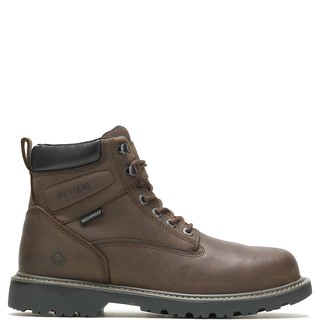
The Wolverine Floorhand Waterproof Soft Toe is a 6-inch leather work boot for farmers who want more structure than a rubber boot. I recommend it for equipment work, shop tasks, fencing, dry barn work, and general farm days when full-height rubber boots are overkill.
Key Specifications
- Safety toe type: Soft toe
- Waterproof: Yes
- Upper material: Waterproof full-grain leather
- Outsole: Slip-resistant outsole
- Boot height: 6 inches
- Closure: Lace-up
- Work style: Leather work boot
Pros
- More supportive than most pull-on rubber boots
- Waterproof leather upper
- Slip-resistant outsole
- Better ankle fit because of laces
- Good for mixed farm and shop work
Cons
- Not as easy to rinse clean as rubber boots
- No safety toe in this version
- Lower height is not ideal for deep mud or manure
My Experience
This is the boot I would reach for when the farm day involves walking, driving equipment, fixing fence, loading feed, or working in the shop. The lace-up design gives better heel hold than most pull-on boots, and that helps on uneven ground.
The break-in period is more noticeable than rubber or neoprene boots because it is leather, but the payoff is better support. I also like that it looks normal enough to wear off the farm.
It is waterproof, but I would not treat it like a knee-high muck boot. For puddles, wet grass, and damp work, it is useful. For deep mud or pressure washing pens, I would switch to rubber.
What Other Buyers Say
Buyers often appreciate the value, waterproof leather, and comfort after break-in. Some report that the boot needs time to soften, and others note that it is better for general work than extreme wet farm conditions.
Best For
Best for farm shops, equipment operators, fencing, feed work, dry barns, and farmers who prefer leather lace-up support.
➤➤➤ Click Here to Check Price on Amazon
TINGLEY Pilot G2 Plain Toe Knee Boot
Product Image
Short Description
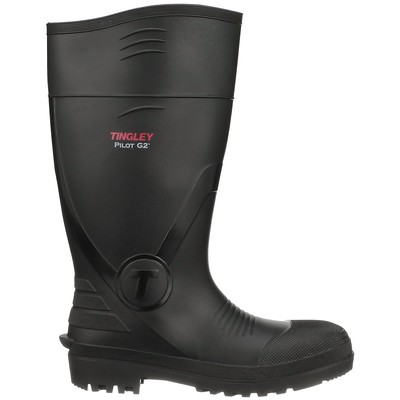
The Tingley Pilot G2 Plain Toe is a general-purpose PVC knee boot made for wet, muddy conditions, including agriculture. I like it for farmers who want a lightweight, waterproof, no-fuss boot for chores where safety-toe protection is not required.
Key Specifications
- Safety toe type: Plain toe
- Waterproof: Yes
- Upper material: PVC
- Boot height: Knee boot
- Primary applications: Agriculture, foul weather, general purpose work
- Closure: Pull-on
Pros
- Lightweight for a tall waterproof boot
- Good for wet, muddy agricultural work
- Easy to clean
- Plain-toe design keeps it simple and flexible
- Practical for seasonal farm chores
Cons
- No safety toe
- Less cushioning than premium chore boots
- PVC may not feel as flexible as neoprene
My Experience
I see the Tingley Pilot G2 as a dependable chore boot for wet jobs that do not require heavy protection. It is the type of boot I would keep near the door for feeding animals, checking irrigation, walking wet rows, or doing quick muddy tasks.
Because it is a plain-toe PVC boot, I would not use it around heavy machinery or livestock situations where toe impact is a concern. But for light farm work, foul weather, and messy chores, it is simple and effective.
For all-day use, I would add cushioned insoles. The boot does the waterproof job well, but comfort depends a lot on your socks and foot support setup.
What Other Buyers Say
Buyers typically like the waterproof coverage, light feel, and usefulness in wet work. Common complaints are about limited cushioning, sizing, and the basic feel compared with more expensive rubber-neoprene boots.
Best For
Best for light farm chores, wet weather, gardening, irrigation checks, and general agricultural use without safety-toe requirements.
➤➤➤ Click Here to Check Price on Amazon
How to Choose the Right Work Boots
Choosing the best work shoes for farmers starts with the job. A dairy worker, crop farmer, ranch hand, mechanic, and homesteader may all need different footwear.
Safety toe type matters first. Steel toe boots offer strong impact protection and are useful around equipment, livestock gates, tools, and feed handling. Composite toe boots are lighter and do not transfer cold as much, but none of the selected farm boots here should be assumed composite unless listed. Soft toe and plain toe boots are more flexible and often more comfortable, but they do not protect against impact.
ASTM safety standards are important if your workplace requires certified protective footwear. Look for ASTM F2413 when toe protection or electrical hazard protection is required. I do not assume a boot is certified unless the manufacturer or retailer clearly lists it.
Waterproofing is usually non-negotiable for farmers. Rubber, PVC, and neoprene boots are best for deep mud, manure, and wash-down chores. Waterproof leather boots are better for mixed dry and damp work but are not as easy to clean.
Slip resistance matters around wet concrete, feed rooms, milking parlors, trailers, and slick grass. Deep lugs help in mud, while flatter slip-resistant patterns can work better on wet hard surfaces.
Comfort for long shifts comes from cushioning, fit, arch support, and weight. Rubber boots often need upgraded insoles. Leather lace-up boots usually offer better ankle hold and support, but they take longer to break in.
Boot height should match your environment. A 6-inch leather boot is good for shop and field work. A 12-inch waterproof boot is better for wet chores. An 18-inch or knee-height boot is better for mud, irrigation, tall grass, and manure.
Insulation depends on climate. Non-insulated boots are better for warm weather. Neoprene chore boots add warmth and comfort but can feel hot in summer.
Durability depends on materials and use. Rubber and neoprene boots handle wet messes well, but they can crack over time. Leather boots can last well if cleaned and conditioned, but farm chemicals and constant manure exposure are hard on leather.
Fit is especially important with pull-on boots. If the heel slips too much, you will get rubbing. If the calf is too tight, the boot becomes annoying fast. I prefer enough room for thick socks without letting my foot slide around.
FAQs
Are rubber boots better than leather boots for farmers?
Rubber boots are better for mud, manure, wet grass, and wash-down chores. Leather boots are better for support, driving equipment, shop work, fencing, and long walking days on drier ground.
Do farmers need steel toe boots?
Farmers should consider steel toe boots when working around livestock, gates, machinery, pallets, firewood, tools, or heavy feed. For light gardening or wet field walking, a plain toe may be enough.
Are waterproof farm boots hot in summer?
Yes, many waterproof rubber and neoprene boots can feel hot in summer because they do not breathe like mesh or unlined leather. Non-insulated rubber boots and moisture-wicking socks help.
Should farm work boots fit tight or loose?
They should feel secure, not tight. Your toes need room, your heel should not slide excessively, and you should have enough space for work socks. Pull-on boots usually need a little extra attention because you cannot tighten them with laces.
How long should farm work boots last?
It depends on daily use, chemicals, manure exposure, terrain, and care. Heavy daily farm use can wear boots out much faster than occasional chores. Replace them when waterproofing fails, tread is worn smooth, or the toe/heel area breaks down.
Conclusion
For the best overall work shoes for farmers for 2026, I recommend the MUCK Chore Classic Men’s Steel Toe Boot because it gives farmers waterproof protection, steel-toe coverage, and a chore-ready build that fits real agricultural work.
For the best value, I would choose the DUNLOP Chesapeake Steel Toe Waterproof Work Boots. They are practical, waterproof, protective, and affordable for messy farm chores.
For the best premium choice, I would go with the LaCrosse Men’s Grange 18-inch Waterproof Boot if you want a classic tall rubber field boot, or the Xtratuf Men’s Legacy Boot if your work involves slick wet surfaces and wash-down areas.
If your farm work is wet, muddy, and unpredictable, start with a waterproof pull-on boot. If your day includes more equipment, shop, or fencing work, add a supportive leather boot like the Wolverine Floorhand. The right pair depends on your farm, but the best choice is the one that keeps your feet dry, stable, protected, and comfortable from the first chore to the last.