Finding the best work shoes for flat feet and plantar fasciitis is not just about buying the softest pair on the shelf. When my feet are already tired, the wrong work shoe can make heel pain, arch fatigue, and lower-leg soreness worse before lunch.
For flat feet, I look for a stable platform, enough width through the forefoot, removable insoles, shock absorption, and a sole that does not twist too easily. For plantar fasciitis, I care even more about heel cushioning, arch support, and all-day comfort on concrete.
I focused on work shoes that make sense for warehouse, light construction, manufacturing, delivery, maintenance, food service, and general industrial jobs. Some are safety-toe shoes, while others are better for lighter-duty work where comfort matters most.
Quick Summary
This article is for workers who spend long hours standing or walking and need work shoes that are more forgiving for flat feet and plantar fasciitis. In my experience, the best options usually combine a roomy fit, cushioned insole, stable outsole, and lightweight build.
My top overall recommendation is the Skechers Cankton Steel Toe Construction Shoe because it offers a practical balance of steel-toe protection, cushioned comfort, and a relaxed fit that works well for many people with flatter feet.
Top Product List
- Skechers Cankton Steel Toe Construction Shoe — Best for Overall Comfort
- HEYDUDE Wally Work CT Composite Toe Work Shoes — Best Lightweight Composite Toe
- Hogent Wide Non-Slip Steel Toe Work Sneakers — Best for Wide Feet
- LARNMERN Slip-On Steel Toe Work Shoes — Best Slip-On Work Shoe
- Tinefiy Steel Toe Safety Work Sneakers — Best Budget Safety Sneaker
- Hogent Steel Toe Air-Cushioned Work Sneakers — Best Air-Cushioned Work Sneaker
Top 6 Best Work Shoes for Flat Feet and Plantar Fasciitis for 2026
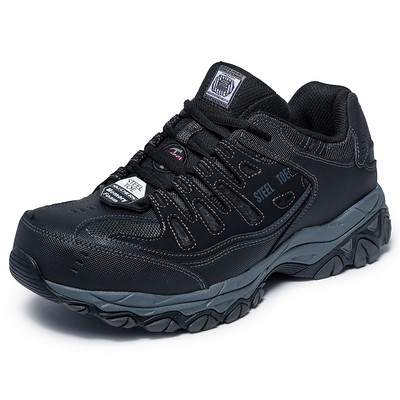
Skechers Cankton Steel Toe Construction Shoe
Product Image
Short Description
The Skechers Cankton is a work sneaker designed for people who want safety-toe protection without wearing a heavy boot. I like it most for warehouse, shop, and light industrial jobs where comfort and toe protection both matter.
Key Specifications
- Safety toe type: Steel toe
- Electrical hazard protection: Available on Skechers Work Cankton ST models
- Insole: Skechers Memory Foam cushioned insole
- Fit: Relaxed Fit design
- Upper material: Duraleather, synthetic, and mesh upper
- Closure: Lace-up
- Work type: Industrial and construction-style work shoe
Pros
- Cushioned underfoot feel
- Roomier fit than many narrow safety shoes
- Steel toe protection
- Good choice for long indoor shifts
- Sneaker-style flexibility
Cons
- Not waterproof
- Memory foam may feel too soft for workers needing firm orthotic-level support
- Not as rugged as a full leather work boot
My Experience
For flat feet and plantar fasciitis, I like work shoes that reduce sharp heel impact without making my foot feel unstable. The Cankton does that well for a safety sneaker. The Memory Foam insole gives immediate step-in comfort, and the relaxed fit helps reduce pressure across the forefoot.
The break-in period is short compared with leather boots. I would still add a supportive aftermarket insole if my plantar fasciitis were flaring badly, because soft cushioning alone is not the same as firm arch support. On concrete, the shoe feels more forgiving than many basic steel-toe sneakers.
What Other Buyers Say
Buyers commonly praise the Cankton for comfort, toe protection, and an easy work-sneaker feel. The most repeated complaints are that it is not the most breathable shoe in hot conditions and that the cushioning can compress with heavy daily use.
Best For
Warehouse workers, mechanics, light construction workers, delivery crews, and anyone who wants a comfortable steel-toe shoe for hard floors.
➤➤➤ Click Here to Check Price on Amazon
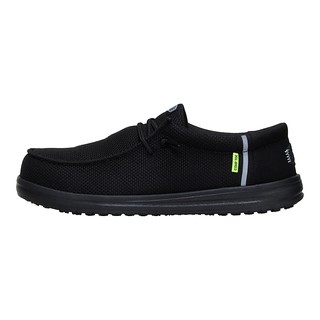
HEYDUDE Wally Work CT Composite Toe Work Shoes
Product Image
Short Description
The HEYDUDE Wally Work CT is for workers who want a casual, lightweight work shoe with composite toe protection. I would pick it for lighter-duty jobs where flexibility and reduced weight matter more than ankle support.
Key Specifications
- Safety toe type: Composite toe
- ASTM certification: ASTM F2413 on Wally Work CT models
- Electrical hazard rating: EH rated on listed Wally Work CT models
- Outsole: Lightweight, flexible slip-resistant outsole
- Slip testing: ASTM F2913 tested / ASTM F3445 certified on Wally Work Comp Toe models
- Toe type: Non-metallic safety toe
- Style: Low-cut slip-on/lace work shoe
Pros
- Very lightweight feel
- Composite toe does not feel as cold as steel in winter
- Flexible sole
- Easy casual fit
- Good for workers who dislike bulky safety shoes
Cons
- Limited ankle support
- Not ideal for rough outdoor job sites
- Soft structure may not suit severe overpronation
- Casual upper may not meet every employer’s footwear policy
My Experience
When my arches are tired, I notice shoe weight quickly. That is where the Wally Work CT stands out. It feels less boot-like than most safety footwear, and that can help reduce fatigue during jobs with constant walking.
For plantar fasciitis, I would not rely on the stock setup alone if I needed strong arch control. I would use it with a supportive insole, especially because flat feet often need more structure than a flexible casual shoe provides. Still, for light warehouse, retail stockroom, or delivery work, the low weight is a real advantage.
What Other Buyers Say
Customer feedback often highlights the lightweight comfort, easy wear, and casual look. Some buyers like that it does not feel like a traditional safety shoe. The common concern is that it may not feel supportive enough for harsher industrial environments or strict safety policies.
Best For
Light warehouse work, retail stockrooms, delivery, inspection roles, and jobs where composite toe protection is required but heavy boots feel excessive.
➤➤➤ Click Here to Check Price on Amazon
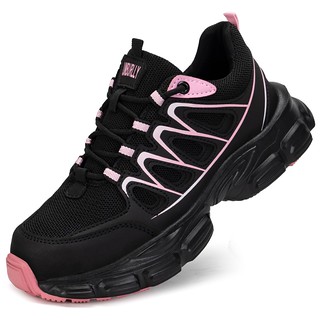
Hogent Wide Non-Slip Steel Toe Work Sneakers
Product Image
Short Description
The Hogent Wide Non-Slip Steel Toe Work Sneakers are a good match for workers who need more toe-box room. For flat feet, width matters because a cramped shoe can make arch strain and heel pain worse.
Key Specifications
- Safety toe type: Steel toe
- Outsole: Non-slip work sneaker outsole
- Fit focus: Wide fit design
- Upper style: Athletic work sneaker
- Work use: Industrial, warehouse, and light-duty safety work
Pros
- Wide-foot friendly design
- Steel toe protection
- Athletic sneaker feel
- Useful for standing and walking jobs
- Better toe spread than narrow safety shoes
Cons
- Verified certification details are limited
- Not a heavy-duty work boot replacement
- May need upgraded insoles for stronger arch support
My Experience
For flat feet, I do not like shoes that squeeze the forefoot because my arch collapses more when my toes cannot spread naturally. The Hogent Wide model is useful because it gives the foot more room than many standard safety sneakers.
The cushioning feels appropriate for long indoor shifts, and the non-slip outsole makes sense for warehouse and shop floors. For plantar fasciitis, I would still pair it with a firmer arch-support insole. The shoe’s main strength is space and comfort, not medical-grade support.
What Other Buyers Say
Buyers tend to focus on the roomy fit, lightweight sneaker feel, and affordability compared with traditional work boots. Some users report that they buy this type of shoe because regular steel-toe footwear feels too narrow or too stiff.
Best For
Wide feet, warehouse work, packing, assembly lines, light manufacturing, and workers who need steel toe protection without a boot feel.
➤➤➤ Click Here to Check Price on Amazon
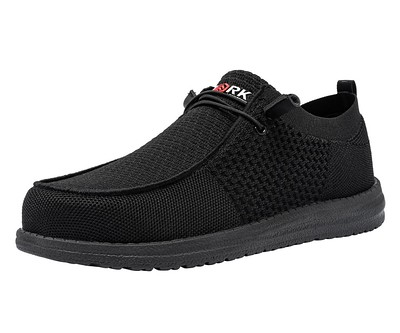
LARNMERN Slip-On Steel Toe Work Shoes
Product Image
Short Description
The LARNMERN Slip-On Steel Toe Work Shoes are designed for convenience, especially if you want a safety shoe that is quick to put on and take off. I like them for indoor jobs where easy wear and lightweight comfort matter.
Key Specifications
- Safety toe type: Steel toe
- Closure: Slip-on
- Design: Semi-enclosed tongue and elastic heel on similar LARNMERN slip-on models
- Upper style: Lightweight safety sneaker
- Work use: Warehouse, light industrial, logistics, and general work
Pros
- Easy slip-on design
- Lightweight feel
- Steel toe protection
- Good for workers who dislike laces
- Comfortable for casual work environments
Cons
- Slip-on fit may not lock the heel as securely as lace-up shoes
- Limited verified ASTM details for this exact listing
- May need an orthotic insole for plantar fasciitis
My Experience
A slip-on work shoe has to be judged carefully when flat feet are involved. I like the convenience, but I also want enough heel hold so my foot is not sliding around. The LARNMERN works best when the fit is snug enough through the midfoot without pinching the toes.
For plantar fasciitis, I prefer a shoe that lets me swap in a supportive insole. This style is comfortable for walking and standing, but I would not expect it to replace a podiatrist-recommended orthotic if my heel pain were serious.
What Other Buyers Say
Recurring buyer feedback around LARNMERN safety shoes often mentions comfort, light weight, and value. Some buyers like the easy-on design for warehouse or factory work. Fit consistency and long-term durability are the areas where expectations should stay realistic.
Best For
Warehouse workers, stockroom staff, delivery drivers, light manufacturing, and anyone who wants a quick slip-on steel-toe shoe.
➤➤➤ Click Here to Check Price on Amazon
Tinefiy Steel Toe Safety Work Sneakers
Product Image
Short Description
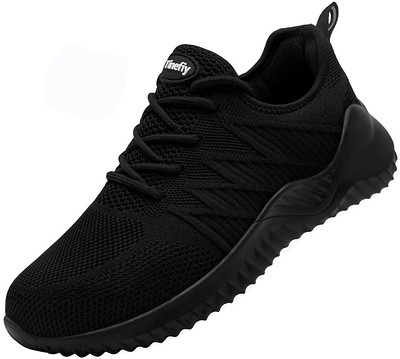
The Tinefiy Steel Toe Safety Work Sneakers are budget-friendly safety sneakers for workers who need basic protection and a lighter feel than boots. I would consider them for light-duty jobs rather than harsh construction sites.
Key Specifications
- Safety toe type: Steel toe
- Design: Lightweight safety work sneaker
- Midsole protection: Puncture-resistant design commonly listed on Tinefiy safety shoe models
- Outsole: Slip-resistant work sneaker outsole
- Upper style: Breathable athletic-style upper
Pros
- Affordable safety-shoe option
- Lightweight compared with traditional boots
- Steel toe protection
- Flexible sneaker feel
- Breathable upper design
Cons
- Not the most supportive option for severe plantar fasciitis
- Durability may not match premium work shoes
- Certification details can vary by listing
My Experience
The Tinefiy is the kind of shoe I would use when I need safety-toe coverage but do not want to drag around heavy boots all day. The lighter build is helpful for foot fatigue, especially during walking-heavy shifts.
For flat feet, the main limitation is support. I would treat the stock insole as a starting point and add a firm arch-support insert if needed. The shoe is better for comfort and value than maximum structure.
What Other Buyers Say
Buyers often describe Tinefiy-style work sneakers as lightweight, breathable, and inexpensive. The most common tradeoff is that they may not hold up as long under rough daily abuse as heavier leather work footwear.
Best For
Budget-conscious warehouse workers, light manufacturing, logistics, retail backroom work, and short-to-medium industrial shifts.
➤➤➤ Click Here to Check Price on Amazon
Hogent Steel Toe Air-Cushioned Work Sneakers
Product Image
Short Description
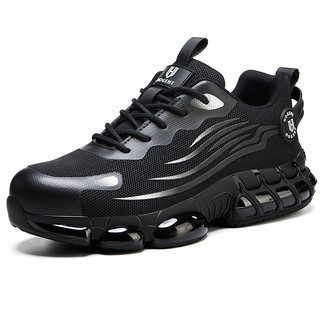
The Hogent Steel Toe Air-Cushioned Work Sneakers are built for workers who want a softer, shock-absorbing ride. I like them most for hard-floor environments where heel impact is a daily problem.
Key Specifications
- Safety toe type: Steel toe
- Cushioning: Air-cushioned sneaker-style sole
- Outsole: Work sneaker outsole
- Upper style: Athletic safety shoe
- Work use: Warehouse, factory, logistics, and light industrial work
Pros
- Air-cushioned underfoot feel
- Steel toe protection
- Good shock absorption
- Sporty sneaker design
- Comfortable for hard floors
Cons
- Air cushioning may feel less stable than a firmer work shoe
- Not ideal for muddy or rugged outdoor jobs
- Workers with severe overpronation may need firmer support
My Experience
Heel impact is one of the biggest issues I notice with plantar fasciitis. The air-cushioned feel on this Hogent model helps soften repeated steps on concrete. That makes it appealing for warehouse walking, picking, packing, and general indoor work.
For flat feet, I would pay attention to stability. Too much softness can sometimes make the foot roll inward. My approach would be to use the shoe for cushioning, then add a supportive insole if I needed better arch control.
What Other Buyers Say
Buyers commonly like air-cushioned safety sneakers because they feel closer to athletic shoes than work boots. Positive feedback usually centers on comfort and lightness, while complaints tend to involve durability expectations in tougher job sites.
Best For
Concrete floors, warehouse walking, logistics, light manufacturing, and workers who want extra heel cushioning.
➤➤➤ Click Here to Check Price on Amazon
How to Choose the Right Work Boots
When choosing work shoes for flat feet and plantar fasciitis, I start with support before style. A soft shoe can feel great for five minutes and still fail after eight hours if it lets the arch collapse too much.
Safety toe type matters first. Steel toe is usually strong and affordable, but it can feel heavier. Composite toe is lighter and non-metallic, which can be more comfortable for workers who walk all day.
ASTM safety standards matter if your employer requires certified footwear. Do not assume every safety-looking sneaker meets your workplace rules. Check whether the shoe has ASTM F2413 protection, EH rating, slip resistance, or other required markings.
For plantar fasciitis, heel cushioning is important, but arch support matters just as much. I prefer removable insoles because they let me add a firmer orthotic-style insert. This is especially useful for flat feet, where the stock insole may not provide enough structure.
Slip resistance is essential for warehouse, restaurant, healthcare, and manufacturing floors. A cushioned shoe is not helpful if the outsole loses grip on wet tile, oil, dust, or polished concrete.
Weight also matters. Heavy boots can increase fatigue, especially if you already have heel pain. Lightweight work sneakers are often better for indoor jobs, while leather boots are better for rough outdoor work.
Fit should be secure but not tight. For flat feet, I want enough room through the toe box so my toes can spread. For plantar fasciitis, I want the heel to stay locked in place so my foot is not sliding and tugging on the fascia with every step.
FAQs
Are work shoes good for plantar fasciitis?
Some are, but not all. The best work shoes for plantar fasciitis have heel cushioning, stable soles, removable insoles, and enough arch support. If the shoe is too flat or too flexible, I would add a supportive insole.
Are steel toe shoes bad for flat feet?
Steel toe shoes are not automatically bad for flat feet. The problem is usually poor fit, narrow toe boxes, heavy weight, or weak arch support. A roomy steel-toe sneaker with a better insole can work well.
Should I choose soft cushioning or firm arch support?
For plantar fasciitis, I prefer both. Soft cushioning helps reduce impact, while firm arch support helps control foot collapse. Too much softness without support can make flat feet feel less stable.
Are slip-on work shoes supportive enough?
Slip-on work shoes can be comfortable, but they are not always the most supportive. I only choose them when the heel fit is secure and the insole can be upgraded if needed.
How often should I replace work shoes for plantar fasciitis?
I replace them when the heel cushioning feels flat, the outsole wears unevenly, or my foot pain starts returning after shifts. For daily hard-floor work, many shoes need replacement sooner than casual footwear.
Conclusion
The best work shoes for flat feet and plantar fasciitis in 2026 are the ones that balance cushioning, stability, fit, and job-site protection.
My Best Overall pick is the Skechers Cankton Steel Toe Construction Shoe because it gives me the best mix of comfort, relaxed fit, and practical steel-toe protection. My Best Value pick is the Tinefiy Steel Toe Safety Work Sneakers because they offer lightweight safety-shoe comfort at a budget-friendly level. My Best Premium Choice is the HEYDUDE Wally Work CT Composite Toe Work Shoes because the composite toe, low weight, and flexible design make it a strong option for lighter-duty work.
For most workers with flat feet and plantar fasciitis, I would start with the Skechers Cankton, then add a quality arch-support insole if heel pain is still an issue.